

Youth to End Solitary SD
Our MissionYesSD is a high-school student led initiative that educates the public and elected officials at the local and state level on the negative implications of solitary confinement, building the community infrastructure necessary to develop safer, more humane carceral institutions.
Donate to YesSD
Our work requires financial backing. Our budget goes towards organizing events, educating the public, and convincing lawmakers to advance our legislative agenda. Donation is a simple way to support our movement.
For any questions about donations, email staff@yessd.org
Our guiding principles
“the degree of civilization in a society can be judged by entering its prisons” - Fyodor Dostoevsky
At Youth to End Solitary SD, we believe that the human rights of prisoners must be protected by our criminal justice system, regardless of the crime they have committed or have been charged with.
We believe that solitary confinement is the embodiment of a larger broken carceral systemwhich traumatizes prisoners for the sake of keeping them in cycles of poverty and recidivism.
Over half of those in solitary confinement suffer from a mental illness, and upwards of 75% of these prisoners have also suffered from adverse childhood experiences (ACE’s).
YesSD further believes in mobilizing youth voice and youth perspective; youth are the primary stakeholders of our future. Building a sustainable movement requires educating and training fellow students to be activists for safer communities and prisons through solitary confinement reform.
SOLITARY CONFINEMENT HURTS PUBLIC SAFETY
Torture is defined as any act “by which severe pain or suffering whether physical or mental, is intentionally inflicted on a person” by the United Nations Convention against Torture.
Medical experts, civil rights attorneys, human rights officials, and the United Nations consider solitary confinement to be a form of torture.
Roughly 3,500 Californians are held in isolation. A man in San Diego County has been put in isolation for 4 years.
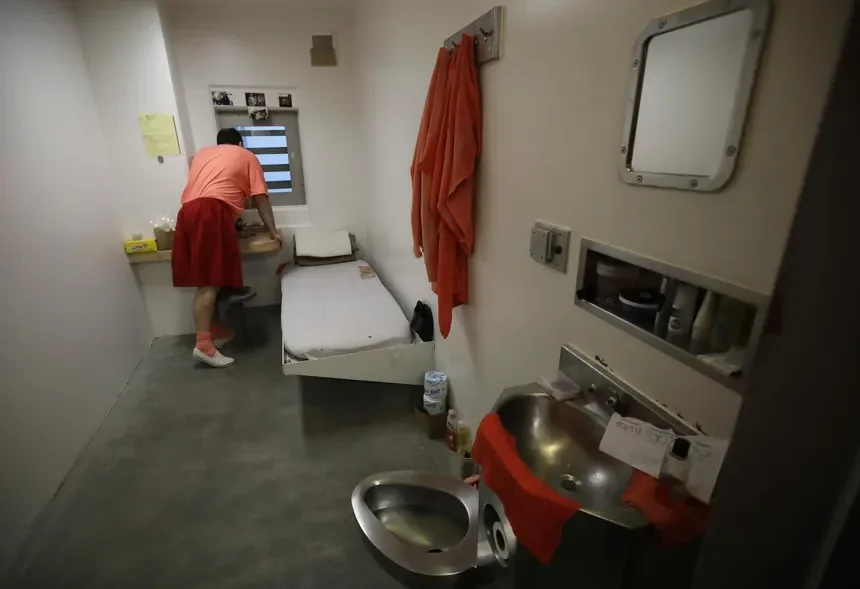
The picture on the right shows a man in a solitary confinement cell in San Jose California looking out his small window. Picture taken from LA Times Associated Press.
Solitary confinement is torture!

“It’s like being buried Alive”
What its Like Inside “The Box”
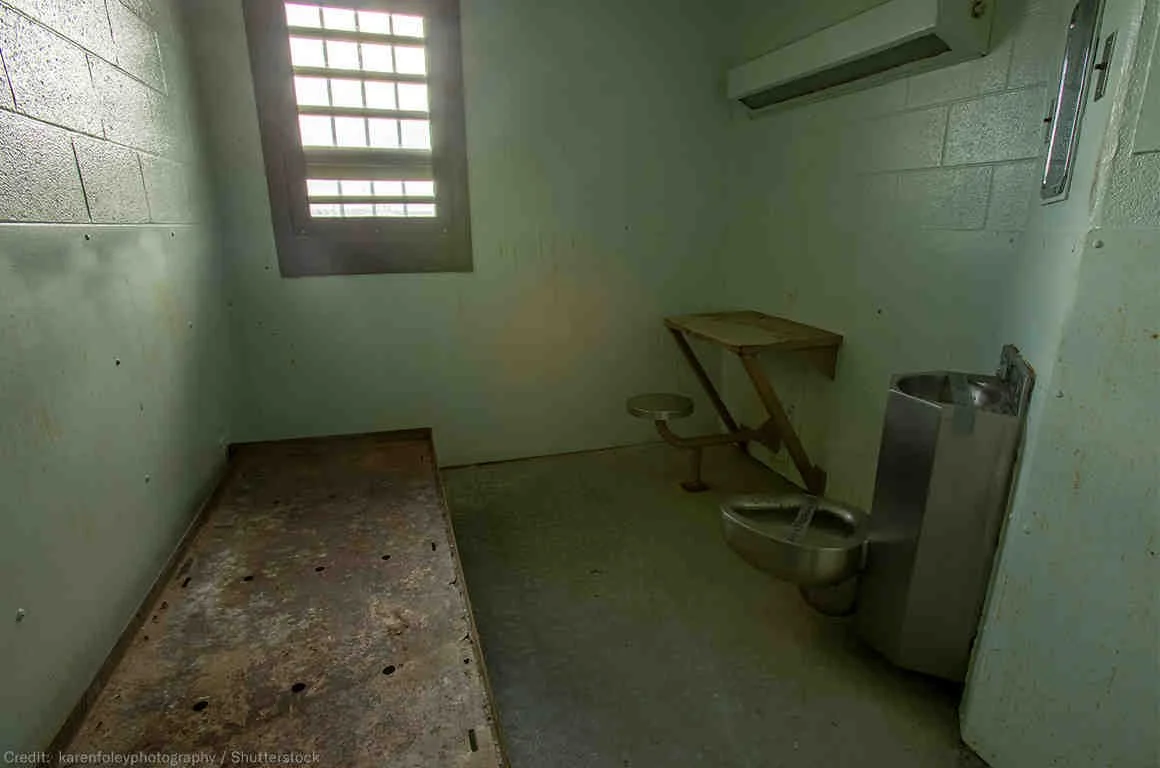
The dimensions of a solitary confinement cell, 6 x 9 feet, are smaller than a parking space
Kept in isolation 23 hours a day, with lights on 24/7
Plumbing backs up, leaving feces and urine on the floors of cells and filling restrictive housing units with the smell of sewage
Lack of proper heating or cooling system
Frequent sounds of banging and screaming
THE EPITOME OF CRUEL AND UNUSUAL PUNISHMENT
Impacts on Physical Health
Inmates in solitary confinement have a higher risk of hypertension and have a shorter life expectancy. The hippocampus and pre-frontal cortex of an inmate visibly shrink after they are placed in isolation.
Psychological Harm
Inmates in solitary confinement are 5x more likely to commit suicide and oftentimes develop cutting disorders. Inmates suffering from long term isolation are known to have schizophrenic visions of people, experience sensory decompensation, and smear feces on themselves.
Sexual Intimidation
Women who experience solitary confinement are subject to strip searches and showering naked with male guards present. There are also several accounts of sexual harassment in solitary confinement wings by male guards, with women performing sexual acts to receive water and other necessary supplies. They are threatened with being placed in solitary confinement when they refuse to perform sexual acts for guards.
An ineffective means of providing safety
Supporters of solitary confinement claim it is needed to maintain safety in jails. But is this really the case?
Several studies have found no relationship between solitary confinement usage and the rate of jail infractions; as a matter of fact, research has found that solitary results in increased rates of violent crime within institutions
One study showed that inmates in isolation who were involved in gangs had “a 9.7% increase in the expected count of violent misconduct and a 12.3% increase in the expected count of nonviolent misconduct
Solitary makes communities less safe
Research from Cornell University has shown that stays in solitary — even relatively short periods lasting a few days — increases the likelihood of recidivism by 15%
In Connecticut, 92% of inmates who spent time in solitary committed another crime, compared to a standard recidivism rate of 61%
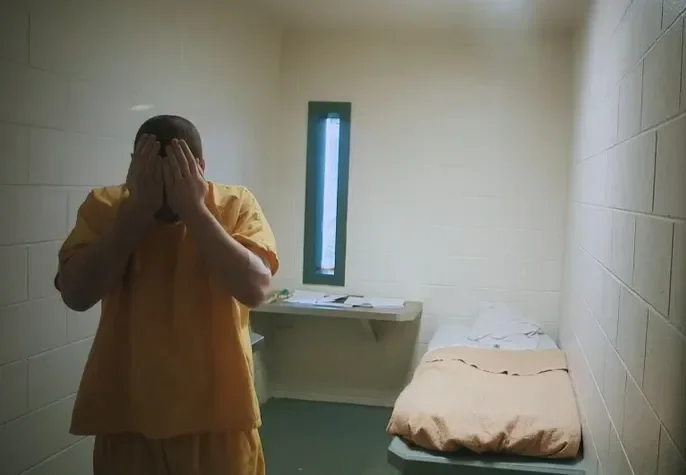
The photo on the left is a shot taken from the documentary “Last Days Of Solitary” by PBS.
Our Strategy
Lobbying
We lobby government officials at both the State and County level to support solitary confinement reform and implement policy changes.
Awareness & Mobilization
We bring attention to issues associated with solitary confinement in order to build public pressure and a community of critically-engaged advocates who are ready to support our mission.
Youth Involvement
We are a completely high school student-led organization. A major component of our work is building networks of youth advocates to create a sustainable and cross-generational movement.
The #solitaryHurtsCommunityWorks Campaign
Youth to End Solitary SD is leading the #SolitaryHurtsCommunityWorks campaign, aiming to end solitary confinement use in both California and San Diego County using the strategy listed above.
California Campaign
We co-lead the California campaign with another high school-student led non-profit, Voices United for Change, which is located in Pasadena.
How can I support the California campaign?
Volunteer or sign up for our newsletter
San Diego Campaign
Youth to End Solitary SD leads the San Diego campaign, bringing together local non-profits, government officials, and youth into a cross-sector, multi-generational movement.
How can I support the San Diego campaign?
Volunteer or sign up for our newsletter
Support YesSD Today!
Join our community of critically engaged advocates by signing up for our newsletter, volunteering with the San Diego #SolitaryHurtsCommunityWorks campaign, donating to our GoFundMe, or follow us on Instagram and TikTok.